×

The Standard e-Paper
Kenya’s Boldest Voice
 The Standard Group Plc is a
multi-media organization with investments in media platforms spanning newspaper
print operations, television, radio broadcasting, digital and online services. The
Standard Group is recognized as a leading multi-media house in Kenya with a key
influence in matters of national and international interest.
The Standard Group Plc is a
multi-media organization with investments in media platforms spanning newspaper
print operations, television, radio broadcasting, digital and online services. The
Standard Group is recognized as a leading multi-media house in Kenya with a key
influence in matters of national and international interest.

Audio By Vocalize
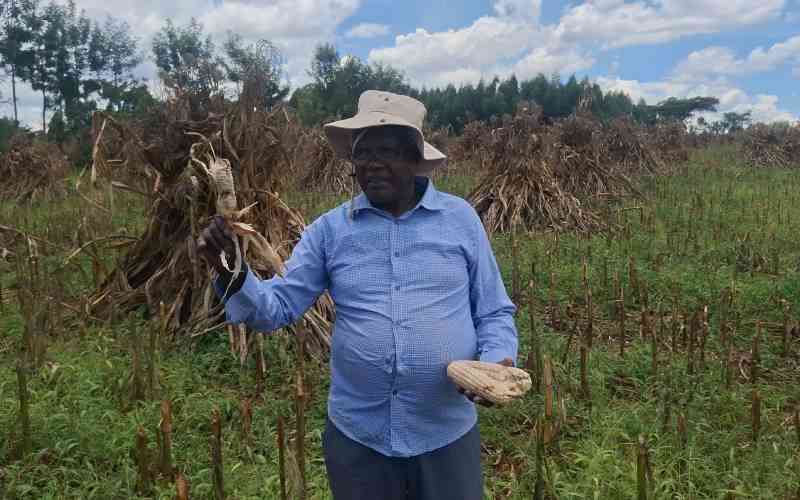
Maize farmers in Trans Nzoia County are bracing for even more losses as El Niño rains approach, just as many finish their harvests.
These farmers are already feeling the sting of drought, which has severely impacted their yields.
If they harvest their maize too early, they risk it rotting, becoming aflatoxin-contaminated, and incurring expensive drying costs.
John Komen, a farmer from Kapsitwet, usually collects around 300 bags from his 15 acres, but this season he’s only expecting about 80 bags due to the extended dry spell.
“I haven’t harvested my maize yet because it will just rot in storage and lead to even bigger losses. It’s better off staying in the field,” Komen explained.
He’s urging the government to quickly reopen the National Cereals and Produce Board’s (NCPB) common-user drying facilities, which he believes are more efficient and cost-effective than the mobile dryers.
Komen criticised the mobile grain dryers that the government purchased for 6 billion shillings, noting that they reduce moisture to only 18 to 20 per cent, whereas safe storage requires it to be at 13.5 per cent.
According to him, NCPB dryers can handle over 450 bags a day, compared to just about 120 bags for the mobile units, and they charge around 70 shillings to dry a 90-kilogram bag.
Komen also wants the government to consider waiving interest on farmers’ loans, as the drought has left many struggling to repay them.
Moses Chelelgo, a farmer in Kwanza constituency, described the drought's impact as massive and is advocating for a price of 4,500 shillings for a 90-kilogram bag of maize.
Chelelgo also wants NCPB to start buying maize in smaller quantities and to subsidise drying costs.
“It takes about 255 litres of diesel for the dryer and another 60 litres for the tractor to dry 120 bags. That costs us nearly 200 shillings per bag, not including logistics.
That’s just not feasible for small-scale farmers,” Chelelgo said.
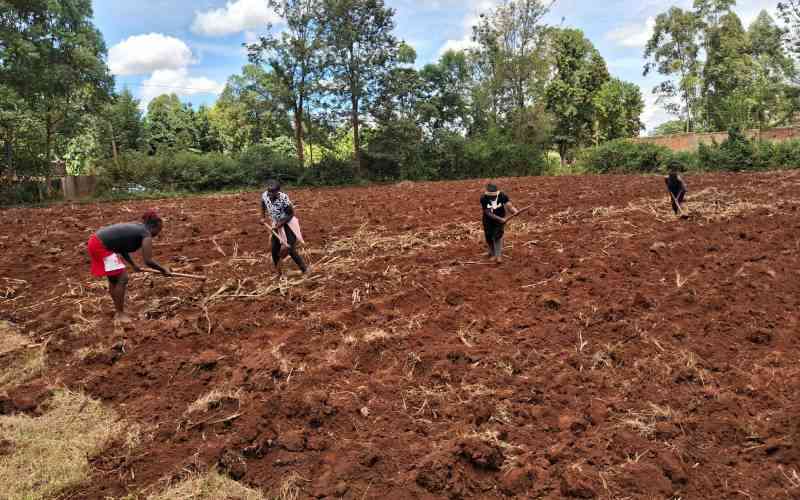
Some farmers who managed to harvest early have opted for short-season varieties. Janet Jumba from Namanjala decided to plant yellow maize, which is expected to mature in just three months.
“I caught the weatherman mentioning that El Niño rains were on the way, so I thought it would be a good idea to plant yellow maize, which is ready to harvest in just three months,” Jumba shared.
Stay informed. Subscribe to our newsletter






Subscribe to our newsletter and stay updated on the latest developments and special offers!







 join
join