×

The Standard e-Paper
Home To Bold Columnists
 The Standard Group Plc is a
multi-media organization with investments in media platforms spanning newspaper
print operations, television, radio broadcasting, digital and online services. The
Standard Group is recognized as a leading multi-media house in Kenya with a key
influence in matters of national and international interest.
The Standard Group Plc is a
multi-media organization with investments in media platforms spanning newspaper
print operations, television, radio broadcasting, digital and online services. The
Standard Group is recognized as a leading multi-media house in Kenya with a key
influence in matters of national and international interest.

Audio By Vocalize
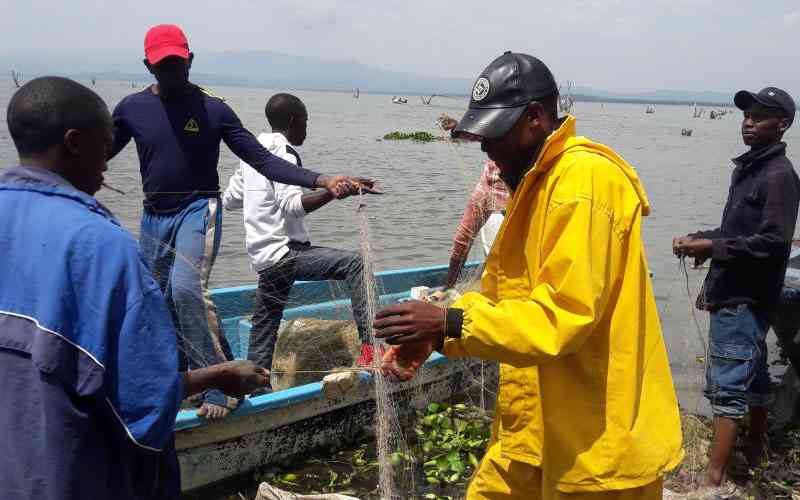
The Kenya Marine and Fisheries Research Institute (KMFRI) has partnered with fishermen to restore the degraded papyrus weed around the troubled Lake Naivasha.
Under the project, funded by WWF, the first phase will target the restoration of 30 acres of the weed, which acts as breeding grounds for fish and a buffer against pollution.
Currently, over 70 per cent of the weed has been destroyed through illegal cultivation, encroachment of riparian land and feed for livestock, a move that has adversely affected fish production.
According to Edna Waithaka, in charge of KMFRI Naivasha, the lake's ecosystem had been adversely affected by the destruction of the papyrus, with waste and silt openly flowing into the lake.
The senior scientist noted that over 70 per cent of the weed had been destroyed over the last 20 years, with the situation getting worse by the day.
“This weed is critical in protecting the lake from effluents from nearby estates, farms and hotels and thus the need to rejuvenate it so that we can stop any form of pollution,” she said.
Speaking after a stakeholder meeting in Naivasha, she said that plans were underway to first restore 30 acres before targeting an extra 100 acres in two years.
She added that with increased pollution, the lake's fish catch had dropped sharply, adding that the planned exercise would address fish production.
“The papyrus weed will also address the quality of water in the lake, which has been a major challenge for years mainly due to the effluents,” she said
Grace Nyambura from Lake Naivasha and Lake Oloiden Fisher's Organisation said the fisher-folk came up with the idea after realising that fish catch was dropping at an alarming level.
She said that the papyrus weed acted as the breeding grounds for fish, adding that the restoration programme would come in handy in addressing the decline.
“For years we have seen the papyrus weed burnt and cut down by pastoralists and private individuals, and this has harmed the water quality and fish catch,” she said.
While thanking WWF for the support, she said that the lake, which is surrounded by five of the eight wards in Naivasha, was under high pressure mainly in terms of illegal fishing.
On his part, Paul Ruoya from Lake Naivasha Basin Landscape Association (LANABLA) said that the lake was facing challenges from the upper catchment area where illegal logging was going on unabated.
“Illegal logging under the eyes of government officers has been going on, and this in the future will have a major effect on the water levels flowing downstream,” he said.
Stay informed. Subscribe to our newsletter






Subscribe to our newsletter and stay updated on the latest developments and special offers!








 join
join