×

The Standard e-Paper
Fearless, Trusted News
 The Standard Group Plc is a
multi-media organization with investments in media platforms spanning newspaper
print operations, television, radio broadcasting, digital and online services. The
Standard Group is recognized as a leading multi-media house in Kenya with a key
influence in matters of national and international interest.
The Standard Group Plc is a
multi-media organization with investments in media platforms spanning newspaper
print operations, television, radio broadcasting, digital and online services. The
Standard Group is recognized as a leading multi-media house in Kenya with a key
influence in matters of national and international interest.

Audio By Vocalize
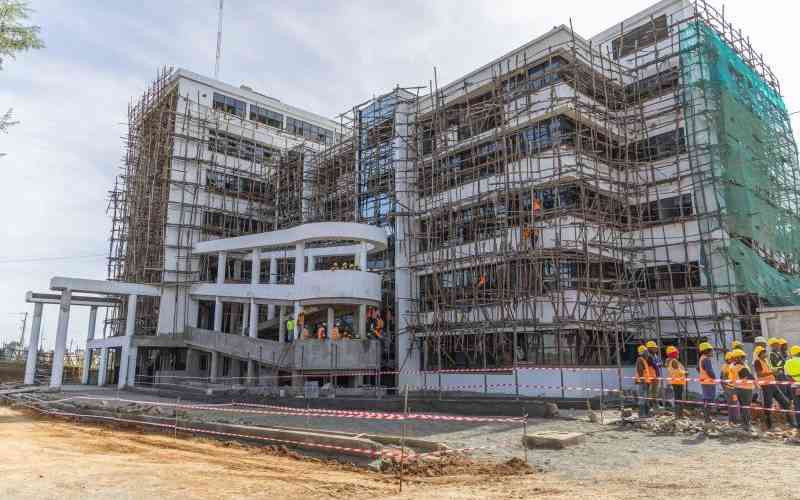
Architects have been urged to consider sustainability while designing and developing buildings and houses for the sake of environment and for the community.
This is also as climate change threatens the value and lifespan of buildings and houses.
The call was made by Prof Wyne Mutuma, an architect and advocate of the High Court of Kenya and the managing partner at Wyne and Associates on the last fifth day of the biannual Nairobi Biennale 2026 that was held at ASK Nairobi Showground Dome along Ngong Road.
“Development cannot exist in a vacuum of just economics, we need to think about all these factors that impact on sustainability. Chief among them is the environment and the materials that we are using in context to what happens to the environment,” said Prof. Mutua.
He added: “We also should think about the communities that we engage with, what value they find in what we build, how it eases their way of living now and in the future, and also on governance so that we need to start thinking at ethical point of view so that we consider the materials used to avoid collapse of buildings.”
Prof Mutuma said going sustainable in designing and developing buildings requires moving from essentially what is fragile, building technologies and outputs that are more resilient.
“This is due to different factors pressing against the built environment and one of the key is climate, which is an existential threat now to construction in terms of material usage and destruction caused by technology,” he said.
The first event in Africa organised by the Architectural Association of Kenya(AAK) held for five days and held under theme; ‘Shifting the Center: From Fragility to Resilience; Reclaiming Africa's Architecture and Future’, brought together build environment professionals and students from local universities.
The event also had exhibition displays with building units of large and small scale and expressive, visual and textile arts and also a book of a collection of sustainable projects was launched.
The book has different projects from Africa from built environment and arts sector players with five main themes including; resilience and people, futuristic buildings, urban transformation and renewal, children, youth and the future and finally arts.
Jacob Mwangi, AAK chief executive officer, emphasised the need for all categories of people have a say in what structures are built in communities.
“All of us need to have a voice on the manner and spaces that we live in and work from. The voices of everyone matter, from the point of creating environments that are adapted to the specific needs of people living there to improve the quality of lives since our country is diverse from coastal to northern regions,” he said.




Subscribe to our newsletter and stay updated on the latest developments and special offers!






 join
join