×

The Standard e-Paper
Stay Informed, Even Offline
 The Standard Group Plc is a
multi-media organization with investments in media platforms spanning newspaper
print operations, television, radio broadcasting, digital and online services. The
Standard Group is recognized as a leading multi-media house in Kenya with a key
influence in matters of national and international interest.
The Standard Group Plc is a
multi-media organization with investments in media platforms spanning newspaper
print operations, television, radio broadcasting, digital and online services. The
Standard Group is recognized as a leading multi-media house in Kenya with a key
influence in matters of national and international interest.

Audio By Vocalize
In the midst of gloom over purported decline in serious research and knowledge creation in institutions of higher education, there are glimmers of hope that all is not lost. Two unrelated events involving two of Kenya’s institutions, within two months of each other, indicate that something intellectual is cooking and needs support.
First, the young National Defence University (NDU) has undertaken research in security-related areas among them the place of the boda boda transport industry in countering likely threats to Kenya’s projected sense of security.
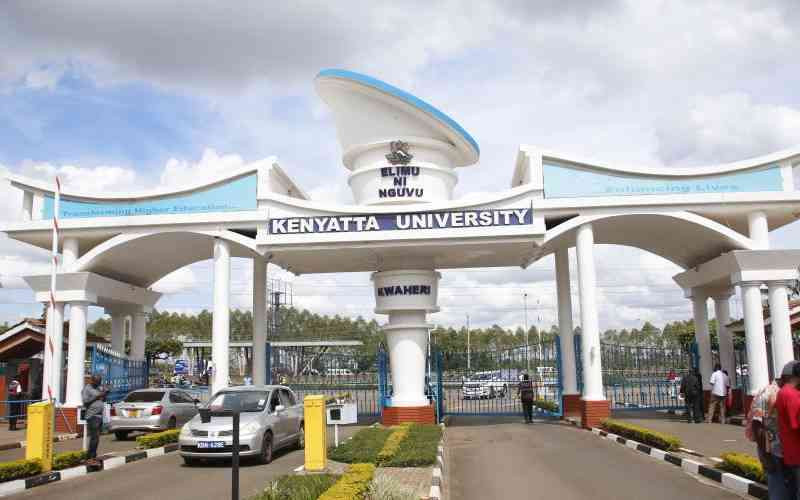
Second, the History Department of Kenyatta University (KU) linked up with the Council for the Development of Social Science Research (CODESREA) officially to remember Bethwell Allan Ogot as a great man of African history who at one time taught at the university. The CODESREA chief executive Godwin Murunga, a former KU student and lecturer, had many good reflections on Prof Ogot.
The two events touching on university-level research potential imply that the future can be bright despite the odds. The NDU, an offshoot of Daudi Tonje’s ‘grand strategy’ in the 1990s on protecting Kenya’s future national interests through coordinated training of top-level policymakers irrespective of the branch of government, is well-resourced as a national security organ.
Once he convinced President Daniel arap Moi that the idea, which he borrowed from India and Britain, was, in the long run, worth it, Tonje made his generals to start teaching critical thinking and decision making under trees while awaiting buildings to be constructed. Almost three decades later, NDC gave birth to NDU and NIRU that are empowered to undertake research. The boda boda research, which NDU Vice Chancellor David Tarus, an NDC graduate, vows will not gather dust in high-level government shelves, shows that NDU, although still has teething problems, wants to be a serious organ when it comes to national security research.
Like Tonje, Ogot was close to Moi and had a lot of influence in the development of post-colonial history consciousness. He was always, right from the colonial days when he taught Mathematics at Alliance High School at the height of the Mau Mau War, a man of the establishment and knew which side of the bread was buttered. He feared Carey Francis, whose power on colonial education, sprinkled with intense phobia of American education influence, could destroy a prospective student.
Ogot remained a Carey Francis man and got a chance to attend Andrews, a good British University in Scotland, where he developed an interest in history. His interest coincided with that of Roland Oliver at the University of London who taught ‘tribal history’ and was receptive to Ogot exploring Oral Traditions as a source.
With the coming of independence, Ogot taught and promoted history at the University of Nairobi, Kenyatta University, and Maseno University while remaining a strong man of the establishment. He survived his 1980s role as part of Moi’s “intellectual home guards” fixing intellectual terrorists at the university and then emerged as Chancellor of Moi University when his ‘Kijana’ friend at Makerere, Mwai Kibaki, was president. He also became an advisor to Penina Aloo Obutho on how to survive in tough university administrative situations. Prof Aloo took it so well that she now is Vice-Chancellor of Maasai Maara University in Narok.
What remained constant with Ogot, however, was not serving the establishment of the day. It was his love and promotion of history more than any other Kenyan. His admirers within and outside Kenya, including Toyin Folola, a Nigerian at the University of Texas, CODESREA and Kisumu Governor Peter Anyang Nyong’o, injected history revival spirit in a time deliberately hostile to history.
The two events, NDU trying to understand boda boda in security terms and historians remembering one of their own, are encouraging that a spirit of spirited research still exists. They awaken dormant minds.







Subscribe to our newsletter and stay updated on the latest developments and special offers!








 join
join