×

The Standard e-Paper
Join Thousands Daily
 The Standard Group Plc is a
multi-media organization with investments in media platforms spanning newspaper
print operations, television, radio broadcasting, digital and online services. The
Standard Group is recognized as a leading multi-media house in Kenya with a key
influence in matters of national and international interest.
The Standard Group Plc is a
multi-media organization with investments in media platforms spanning newspaper
print operations, television, radio broadcasting, digital and online services. The
Standard Group is recognized as a leading multi-media house in Kenya with a key
influence in matters of national and international interest.

Audio By Vocalize
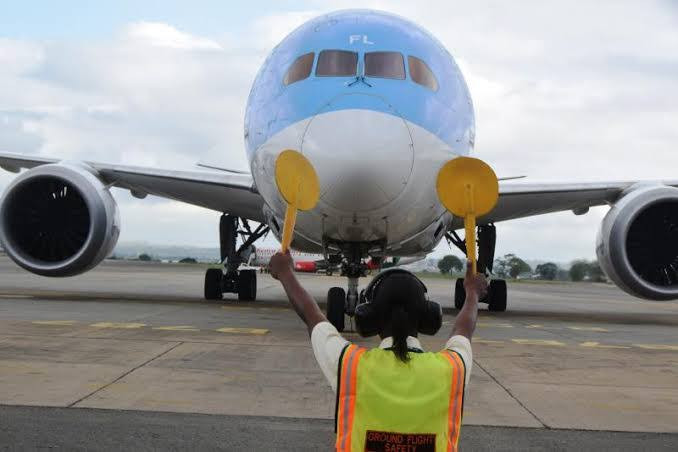
By now, it is obvious to all but the most impervious that the world has changed in ways that would have been difficult to contemplate at the start of the year.
The war in the Middle East has put at risk the region’s long-established position as one of the world’s most dependable air-transport corridors. At the same time.
It has created an unexpected opportunity for African hubs to emerge as credible alternatives.
Kenya and Ethiopia, in particular, have recorded above-average traffic, notably, during what would traditionally be considered the low season.
Still, the obstacles preventing Africa from becoming an air transport giant remain formidable. Home to 17 per cent of the world’s population, the continent accounts for barely 3 per cent of the global air transport market.
Its airlines operate where commercial realities, infrastructure deficits, uneven regulatory maturity and geopolitical uncertainty collide. Some states and carriers perform at, or above, international benchmarks.
Others remain constrained by weaknesses in oversight, infrastructure and institutional capacity.
Under normal circumstances, these conditions would make African aviation an exceptionally difficult business.
The present environment, however, is anything bit normal. Earlier this year, the International Air Transport Association (IATA) projected that African airlines would operate on profit margins of about 1 per cent against a global industry average of 3.9 per cent. Most carriers are likely to fare worse.
The figures become starker when measured per passenger. IATA expects African airlines to earn roughly USD 1.30 (Sh169) per passenger. That leaves almost no margin for error.
A weather-related delay, technical fault or other operational disruption, routine hazards in an increasingly complex and digitised industry, can erase the profit from a passenger almost instantly.
Then there is the geopolitical shock. Conflict in the Middle East has disrupted energy markets and contributed to sharp increases in jet-fuel prices.
These have risen from roughly USD 90 per barrel to peaks approaching USD 150- 200.
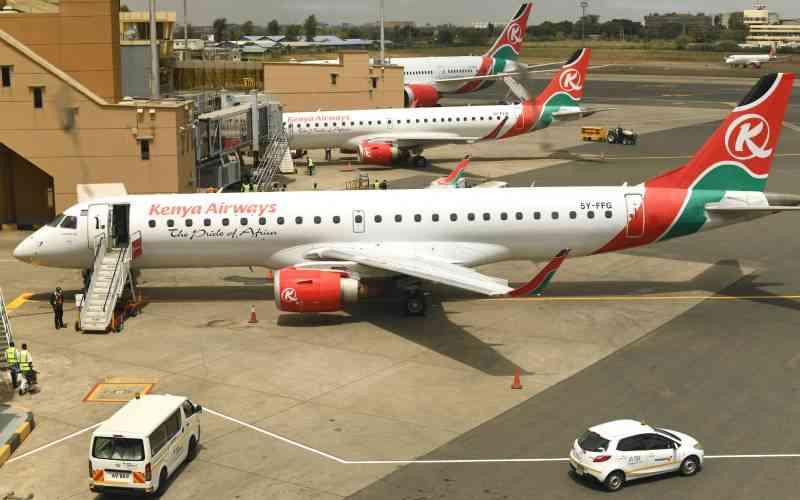
For carriers such as Kenya Airways, the consequences have been severe. Fuel costs have risen by 72 per cent this year. That matters enormously in an industry where fuel accounts for about 40 per cent of operating costs.
Stay informed. Subscribe to our newsletter
The obvious response would be to pass higher fuel costs on to passengers, as other transport industries might. Aviation, however, has less room to manoeuvre.
For one thing, passengers can purchase tickets as much as a year in advance. Airlines must therefore honour those fares leaving little scope to reprice tickets when costs subsequently surge.
For another, air travel is highly price sensitive. Sharp fare increases can quickly suppress demand, particularly among leisure travellers.
Competition further limits airlines’ freedom to raise prices: Carriers must remain competitive with rivals operating from jurisdictions where costs may be significantly lower.
The arithmetic is therefore unforgiving. Many African airlines may struggle to post profits this year with some potentially recording losses. Yet there are reasons for cautious optimism.
Initiatives such as those by the African Airlines Association to secure fuel at lower prices through bulk purchasing could provide some relief.
So could the gradual easing of global aircraft-parts shortages, which have constrained fleets and schedules.
If supply chains normalise and operational disruptions recede next year, African aviation may finally regain some of the breathing space it so badly needs.
Mr Khafafa is a public policy analyst





Subscribe to our newsletter and stay updated on the latest developments and special offers!








 join
join