×

The Standard e-Paper
Kenya’s Boldest Voice
 The Standard Group Plc is a
multi-media organization with investments in media platforms spanning newspaper
print operations, television, radio broadcasting, digital and online services. The
Standard Group is recognized as a leading multi-media house in Kenya with a key
influence in matters of national and international interest.
The Standard Group Plc is a
multi-media organization with investments in media platforms spanning newspaper
print operations, television, radio broadcasting, digital and online services. The
Standard Group is recognized as a leading multi-media house in Kenya with a key
influence in matters of national and international interest.

Audio By Vocalize
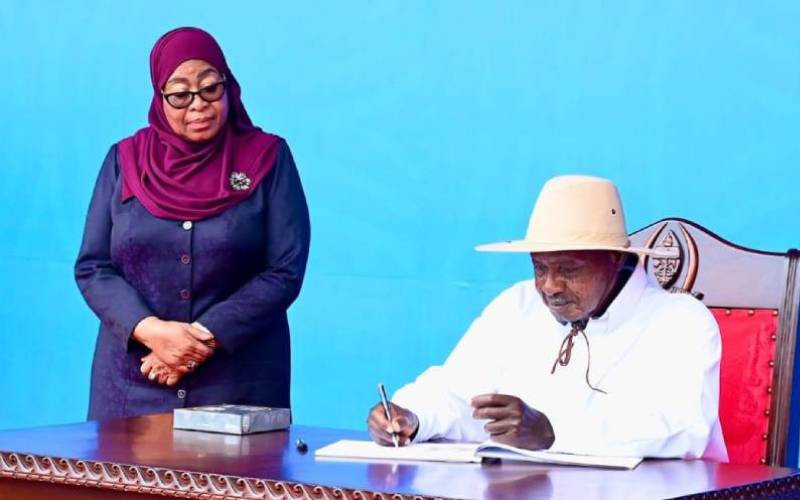
Earlier this month in Dar es Salaam, Presidents Samia Suluhu Hassan and Yoweri Museveni witnessed the signing of an agreement to develop a regional energy hub at the Port of Tanga. To understand why it matters, we need to go back to February 28.
When the US-Iran war broke out, Africa’s fuel supply was under immediate threat. Within days, major oil actors were declaring force majeure, freight and insurance costs on tanker routes spiked dramatically, and countries thousands of kilometres from the Strait of Hormuz faced the prospect of empty forecourts.
The lesson is blunt. If Africa’s energy security depends on geographies it cannot influence, its hospitals, transport networks and economies will be held hostage to conflicts and events it is not involved in.
Six months on, East Africa’s response as a region has been instructive and varied. Some countries have continued to scramble, staying fully reactive. Others have moved more decisively, taking a pragmatic approach and planning proactively for continued geopolitical instability.
The Tanga agreement, a memorandum of understanding between the Tanzania Petroleum Development Corporation (TPDC), the Uganda National Oil Company (UNOC) and Vitol Bahrain, is a glimpse of what strategic planning for the new normal looks like. The project, which builds on the nearly complete East African Crude Oil Pipeline, could eventually draw more than $20 billion in refining, storage, logistics and petrochemical investment, and potentially be one of the largest integrated energy developments anywhere in Sub-Saharan Africa.
The MoU will kick off significant technical and financial work, including feasibility studies, engineering design, and investment decisions to turn Tanga into the operating hub the understanding envisions. Even though the initiative is in its early stages, the agreement should be welcomed by citizens of Tanzania and Uganda as a strong commitment to securing fuel supply and lowering prices in the two countries.
This development is best understood by looking at their track record in recent months. Tanzania and Uganda were among the more proactive players in East Africa when the Middle East conflict erupted, and it shows in how they have navigated the resulting crisis.
Tanzania put together a joint task force in March, pulling together the TPDC, the Petroleum Bulk Procurement Agency (PBPA), and the Energy and Water Regulatory Authority (EWURA), to ensure a guaranteed supply of fuel throughout the height of the crisis. Kenya, by contrast, was in enough trouble that it had to formally ask Uganda for help in guaranteeing supply.
Uganda’s resilience traces to a decision taken two years earlier. Its 2024 overhaul of fuel procurement, which put UNOC at the centre of a shorter, state-anchored supply chain with Vitol, is now credited by the International Monetary Fund with cushioning the country from the worst of the shock. In its 2026 Article IV assessment, the Fund noted that spillovers from the war had been limited so far, pointing to Uganda’s food self-sufficiency and the short nature of its supply chain.
Tanzania and Uganda’s experience suggests that governments that had invested in their own supply chains and infrastructure had room to manoeuvre. Those that had not were left hoping the market would be kind. In short, ownership brings options.
The envisaged Tanga hub is all about controlling the national fuel supply and building a permanent regional infrastructure.
This means storage capacity to smooth out future disruptions, refining capacity to capture value currently exported along with the crude, and a bidirectional pipeline designed to move products toward landlocked markets such as Rwanda, reducing East Africa’s collective dependence on one import corridor. This direction should be seen as a template for similar projects.



Subscribe to our newsletter and stay updated on the latest developments and special offers!






 join
join