×

The Standard e-Paper
Fearless, Trusted News
 The Standard Group Plc is a
multi-media organization with investments in media platforms spanning newspaper
print operations, television, radio broadcasting, digital and online services. The
Standard Group is recognized as a leading multi-media house in Kenya with a key
influence in matters of national and international interest.
The Standard Group Plc is a
multi-media organization with investments in media platforms spanning newspaper
print operations, television, radio broadcasting, digital and online services. The
Standard Group is recognized as a leading multi-media house in Kenya with a key
influence in matters of national and international interest.

Audio By Vocalize
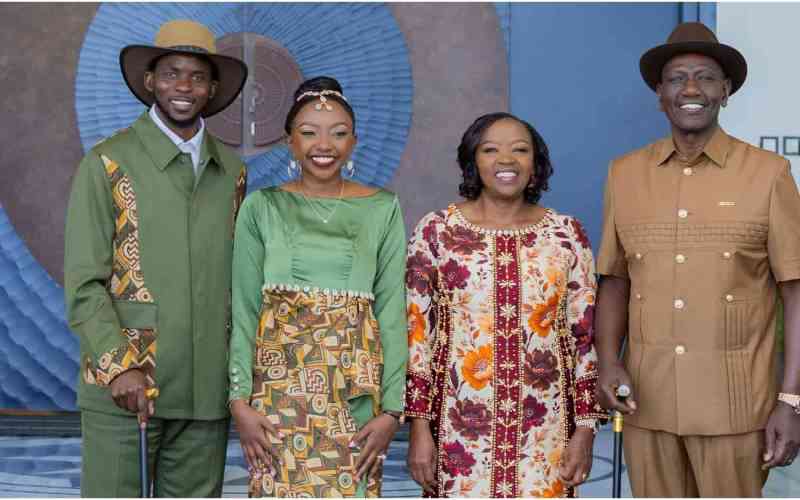
Last week, social media was abuzz with conversations around the auspicious wedding of the President’s daughter, Ms Charlene Ruto. It was clear from the fleet of helicopters and luxury vehicles to the prominent attendance of political and business figures that the wedding had become a public spectacle of wealth, status and political proximity. For a country that currently spends much of its time talking about the excesses of its political class, it was almost surreal watching Kenyans simultaneously admire and obsess over this extraordinary display of wealth and rain down on anyone who dared to suggest that the wedding was an extension of the corruption and degradation of the nation.
Anyone who dared to suggest, for instance, that figures who had been at the forefront of critiquing the President could not possibly in good conscience attend the wedding faced a barrage of insults from people who decided that such statements stemmed from a place of jealousy due to a lack of billions in the bank. Clearly, the public remains deeply fascinated by precisely the kind of wealth and status that, under different circumstances, we describe as evidence of a corrupt and broken political system.
This contradiction deserves particular attention as it points to the weaknesses of our political consciousness and, as a consequence, our power to effect meaningful change. On an ordinary day, Kenyans are remarkably clear about the relationship between political power and material privilege, recognising that many of our political leaders spend their time in power acquiring as much wealth as possible. Yet the reaction to spectacular displays of elite wealth reveals another side of the Kenyan political imagination, which is an admiration for the very material symbols of success that we claim to find objectionable.
The unfortunate possibility, then, is that part of Kenya’s problem with corruption is not necessarily that we have rejected the unjust accumulation of wealth through political power, but that we resent being excluded from it. This is a much more complicated and unsettling proposition than simply saying that Kenyans are hypocrites. For most ordinary people, corruption is experienced materially, meaning that one may work diligently, contribute to the economy through taxes, and still face a lack of access to education, health, and basic infrastructure. The anger that emerges from these experiences is therefore entirely legitimate. But in a deeply unequal society, anger at inequality can coexist with an aspiration for one to become wealthy, even if the mechanisms through which that wealth is produced are morally questionable. Already, youth unemployment is close to reaching the 70 per cent mark, and it is these same youths who, with so much free time, browse through the Internet and see gross displays of wealth acquired through political association, or other unclear avenues such as forex trading. With the inequalities at such a great scale, it is impossible to advise the unemployed youth not to admire those who have what they desperately need, whilst also determining to acquire wealth by whatever means necessary.
We often talk about politics as though the central problem is that the wrong people have been given access to power, and if only we could elect better leaders, we could have a functional country. At the same time, these wrong leaders are greatly admired when they show their material might, which has been acquired through us, leaving us dispossessed in the process. And so it becomes clear that the framing of good leadership is in fact, a red herring, as many Kenyans understand that the political and economic structures that make public office offer an attractive route to personal enrichment because they offer access to resources, opportunities, and influence that ordinary hustling life does not. When people see this repeatedly, it becomes difficult to sustain the belief that politics is fundamentally about public service. Instead, political success can begin to look like a form of economic success, and economic success itself becomes evidence of political competence. It becomes a self-defeating cycle. The politician who leaves office significantly wealthier than they entered it may be condemned publicly while privately being admired for having “made it”.
This is not an argument for blaming ordinary Kenyans for inequality. It is impossible to demand that people stop aspiring to wealth when the society around them constantly teaches that wealth is the most reliable protection against insecurity. When public healthcare is unreliable, the ordinary Kenyan wants to have enough money to access private healthcare, because they watch the elites avoid broken public hospitals altogether and get the best healthcare due to financial access. The same applies to education; when public education is inadequate, private schools become attractive options, and these require money too. When unemployment is widespread, people want connections. When the state does not provide sufficient social protection, families depend on themselves and their networks. Under these conditions, wealth is clearly seen as much more than status, becoming a lifeline that one can use to save oneself and their families from the daily struggles manufactured by State failure. The desire for wealth is therefore often a rational response to an irrationally unequal system. Unless we address these inequalities, we cannot begrudge the gawking public for admiring a dazzling wedding that speaks not only of nuptials, but also of daily bread, good health, good education, and access to the world that can give you more of the same.




Subscribe to our newsletter and stay updated on the latest developments and special offers!







 join
join