×

The Standard e-Paper
Home To Bold Columnists
 The Standard Group Plc is a
multi-media organization with investments in media platforms spanning newspaper
print operations, television, radio broadcasting, digital and online services. The
Standard Group is recognized as a leading multi-media house in Kenya with a key
influence in matters of national and international interest.
The Standard Group Plc is a
multi-media organization with investments in media platforms spanning newspaper
print operations, television, radio broadcasting, digital and online services. The
Standard Group is recognized as a leading multi-media house in Kenya with a key
influence in matters of national and international interest.

Audio By Vocalize
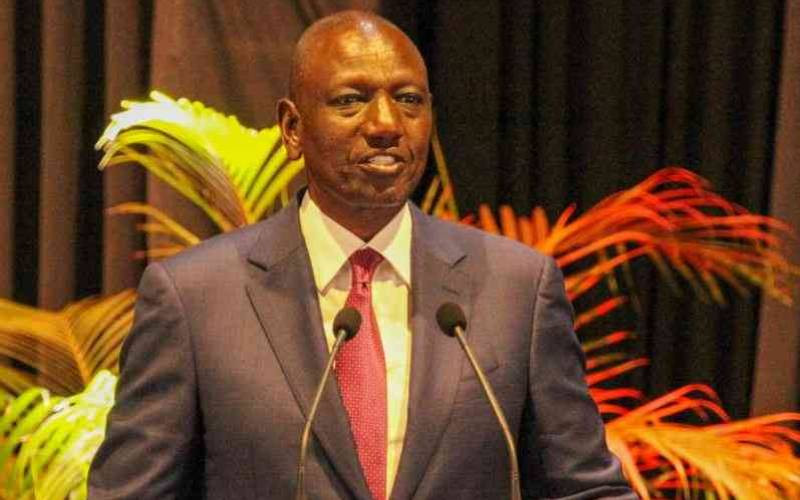
There is nothing wrong with dreaming of Singapore. A nation without a dream is merely a village waiting for tomorrow to happen to it. President William Ruto’s call for a national conversation on Kenya’s long-term future is therefore not the problem. The destination is admirable. The question is whether we are preparing the traveller.
The village has always understood ambition better than national planners sometimes do. A young man may announce that he wants to become a doctor, pilot, professor or president, and the elders will smile. But if he declares that tomorrow he will walk barefoot to Nairobi, overtake a man who left forty days ago and return as governor by Friday without shoes, food or even a walking stick, the village may recommend a small stroke to restore contact between the dream and the head.
Ambition is healthy. Plato feared fiction could seduce society from truth; Aristotle saw imagination as capable of revealing what is possible. The village takes the practical middle ground: dream of heaven, by all means, but first find the road out of the compound.
That is Kenya’s dilemma. We want the Singapore destination while occasionally walking in the opposite direction.
Singapore did not become prosperous merely because somebody imagined prosperity. It invested in human capital, disciplined institutions, professional competence and long-term execution. Kenya can announce a knowledge economy while professors endure unpaid salaries, weak university financing, collapsing morale and endless battles over basic working conditions. Universities are expected to manufacture innovation while surviving on crumbs.
At school level, the parent is increasingly becoming the hidden Ministry of Education, paying fees, trips, remedial lessons, swimming, motivation charges and assorted “small contributions” that multiply like rabbits. Soon a child may need a bursary to finance a school trip to the neighbouring market. Yet we wonder why our graduates memorise brilliantly and invent timidly.
Then comes Kenya’s peculiar assault on expertise. An engineer may spend years mastering structural design, surveying, roads and professional standards, yet a politically connected contractor with little technical knowledge can receive a public tender and hire the engineer to design and supervise the work for peanuts.
The engineer carries the knowledge and professional liability.
The contractor carries the tender.
The politician carries the applause.
And when the road resembles a dried riverbed, the taxpayer carries the blame.
Did Singapore build its infrastructure by making professional competence subordinate to political connections? Perhaps Vision 2060 should decide whether Kenya wants engineers who build roads or politicians who build contractors.
We want Singaporean efficiency while the ordinary Kenyan motorist approaches a police roadblock with three documents in one hand and a suspicion that the fourth requirement is hidden in the officer’s pocket. A police service cannot become an informal taxation department and still inspire confidence in the law.
Nor can a country become Singapore while citizens pay taxes and privately purchase the services those taxes were meant to provide: private hospitals, schools, security, sometimes even water. At what point does a taxpayer become a customer buying the same government service twice?
Healthcare exposes the moral cost. Where patients are allegedly redirected toward private facilities for financial reasons, the question is bigger than one doctor or hospital. It asks whether medicine remains a public trust when the patient’s wallet becomes part of the diagnosis. The poor should not have to become medically bankrupt before becoming eligible for public care.
Stay informed. Subscribe to our newsletter
Justice presents another contradiction. Singapore’s reputation was not built on a judiciary where citizens calculate the political weight of the person standing opposite them. Kenya cannot attract serious investment if justice appears negotiable, delayed or politically coloured.
We have created the strange spectacle of petty offenders filling prisons while grand corruption can occasionally become a campaign asset. A chicken thief may meet the full majesty of the Republic; a sophisticated looter may receive a convoy. Then the same villagers whose clinic has no medicine defend him because, apparently, he is our thief.
This is perhaps corruption’s most dangerous stage: when theft acquires voters.
Political culture deepens the absurdity. Do we elect leaders because of competence, policy and integrity, or because someone distributes allowances, mobilises crowds and praises the president with the enthusiasm of a gospel choir? Does Parliament interrogate power or applaud it? Does government employ advisers because it wants advice, or because every administration needs people whose principal qualification is agreeing with the person who appointed them?
These are not minor defects on the road to Singapore. They are potholes in the road itself.
Kenya has never suffered from a shortage of visions. We have Vision 2030, Vision 2060, industrialisation, digital transformation, housing, manufacturing and prosperity. At this rate, by 2060 we shall have more visions than working elevators.
The difficult question is not what Kenya should look like in 2060. We already know. We want Singapore. The difficult question is: what are we prepared to stop doing today?
Will we stop stealing public money? Stop rewarding political connections over professional competence? Stop humiliating teachers and professors while expecting them to manufacture tomorrow’s citizens? Stop turning public contracts into political gifts? Stop protecting corruption because the corrupt person comes from “our side”? Will we build institutions strong enough to survive the departure of the president who appoints them?
These require no futuristic technology. They require something far more difficult in Kenya: character.
Perhaps this is where the Singapore dream becomes a useful mirror. We do not need to copy Singapore’s buildings. We need to understand the discipline beneath them.
A nation does not become prosperous by imagining the future loudly enough. It becomes prosperous by making its present capable of producing that future.
The village boy may dream of meeting the traveller who left forty days ago. Nobody objects. But before he starts running, the elder will look at his bare feet.
“Mwanangu, where are your shoes?”
That may be the question Kenya needs to ask before Vision 2060. Not: How beautiful is our dream? But are we equipped for the journey?
Because a nation can spend thirty-four years dreaming of Singapore and still arrive in 2060 standing where it began, holding a beautiful vision document, admiring the destination, and wondering why the road never appeared.


Subscribe to our newsletter and stay updated on the latest developments and special offers!






 join
join