×

The Standard e-Paper
Fearless, Trusted News
 The Standard Group Plc is a
multi-media organization with investments in media platforms spanning newspaper
print operations, television, radio broadcasting, digital and online services. The
Standard Group is recognized as a leading multi-media house in Kenya with a key
influence in matters of national and international interest.
The Standard Group Plc is a
multi-media organization with investments in media platforms spanning newspaper
print operations, television, radio broadcasting, digital and online services. The
Standard Group is recognized as a leading multi-media house in Kenya with a key
influence in matters of national and international interest.

Audio By Vocalize
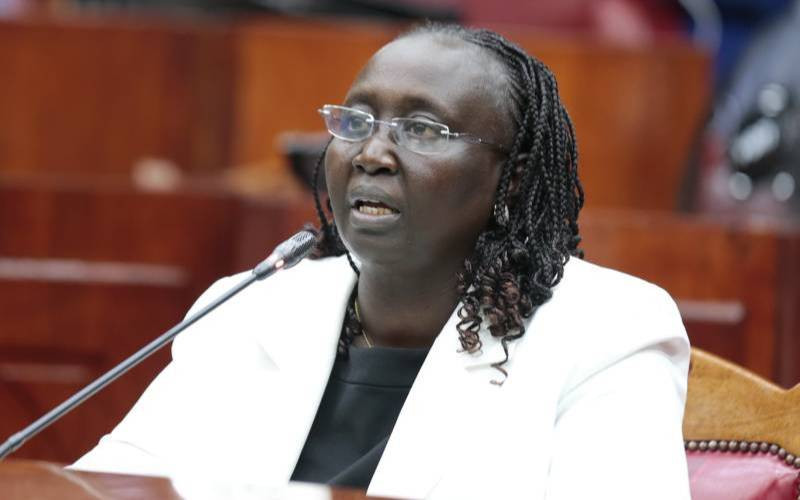
Kenya is broadening its response to gender-based violence and femicide, with the government placing greater emphasis on preventing abuse and supporting survivors alongside efforts to bring perpetrators to justice.
Gender, Culture, Arts and Heritage Cabinet Secretary Hanna Wendot said the government is adopting a coordinated approach that brings together security agencies, the Judiciary, communities and other stakeholders.
The approach marks a wider focus on tackling GBV beyond the courtroom by addressing some of the social and economic challenges that can leave women and girls vulnerable to violence.
Cheptumo added that the government is working to increase the number of GBV recovery centres and safe houses while improving services for survivors.
The government is also strengthening cooperation between law enforcement agencies and the Judiciary to improve investigations and ensure perpetrators face prosecution.
In addition, efforts are being made to make reporting easier through establishing a WhatsApp reporting channel on 0704 884 444, alongside the national GBV helpline 1195.
The expanded reporting options are intended to give survivors and members of the public additional ways to seek help and report cases.
According to the CS, preventing GBV also requires addressing economic conditions that can make women and girls more vulnerable to abuse.
Cheptumo said measures are being pursued to expand access to finance, markets, vocational skills, entrepreneurship and employment opportunities.
“We are promoting financial literacy, digital inclusion and access to emerging economic opportunities, particularly for women and young people in rural and underserved areas,” Cheptumo said.
The strategy reflects a growing recognition that economic empowerment can play an important role in helping women achieve greater independence and reduce vulnerability to abusive situations.
Cheptumo also called on men and boys to take a more active role in preventing GBV and changing harmful social attitudes.
“Gender equality is not a women’s issue alone. Men and boys are critical partners in transforming social norms and advancing equality,” she said.
She said eliminating GBV and femicide will require sustained cooperation involving government institutions, families, communities, religious leaders, civil society organisations and entire society.
Stay informed. Subscribe to our newsletter
They are also seeking greater participation of women in leadership and decision-making and want gender equality considerations incorporated into government policies, programmes and budgets.
According to Antonia N'gabala Sodonon, UN Women Country Representative, GBV has consequences that extend beyond individual survivors, affecting families, communities and confidence in public institutions.
She pointed to the expansion of specialised GBV courts as one example of progress in Kenya's justice response.
Sodonon said the number of specialised GBV courts has increased from one to 13, which has helped in improving case processing and addressing backlogs.
She also highlighted a sharp decline in reported election-related GBV cases between the 2017 and 2022 elections.
About 200 cases were reported around the 2017 elections, compared with three during the 2022 election period, she said.
According to Sodonon this figures demonstrate what can be achieved when government institutions and other stakeholders work together.
The growing involvement of men and young people in campaigns against GBV is another development she described as encouraging.
The issue is increasingly being treated as a national concern rather than one that should be left to women to address alone, she added.




Subscribe to our newsletter and stay updated on the latest developments and special offers!








 join
join