×

The Standard e-Paper
Kenya’s Boldest Voice
 The Standard Group Plc is a
multi-media organization with investments in media platforms spanning newspaper
print operations, television, radio broadcasting, digital and online services. The
Standard Group is recognized as a leading multi-media house in Kenya with a key
influence in matters of national and international interest.
The Standard Group Plc is a
multi-media organization with investments in media platforms spanning newspaper
print operations, television, radio broadcasting, digital and online services. The
Standard Group is recognized as a leading multi-media house in Kenya with a key
influence in matters of national and international interest.

Audio By Vocalize
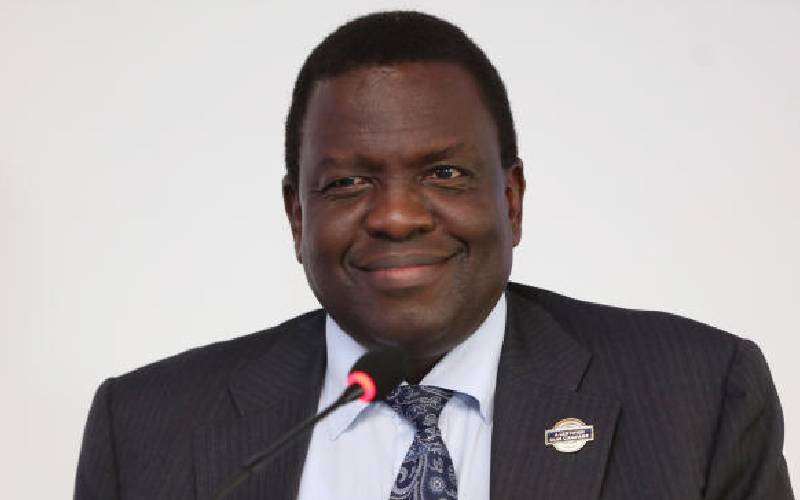
Former Kenya Wildlife Service Director and Northern Rangelands Trust chairperson Julius Kipngetich has challenged the government and education stakeholders to urgently address the stark inequalities in access to education, saying Kenya cannot achieve inclusive development while thousands of children in the northern region remain locked out of school.
Speaking on Friday during the 29th graduation ceremony at Mount Kenya University (MKU), Dr. Kipngetich said Kenya is effectively divided into "two countries" when it comes to education, with one enjoying relatively good learning opportunities while the other continues to grapple with poor access and low school completion rates.
"People often think of one Kenya because they live in what I call Kenya A. But they should visit Kenya B, beyond Isiolo, in counties such as Marsabit, Wajir, Mandera, Turkana and Samburu, where the challenges facing education are enormous," he said.
Drawing from his experience as Chairperson of the Northern Rangelands Trust, which supports community conservancies across northern Kenya, Dr. Kipngetich said education indicators in the region paint a worrying picture. He noted that only about 14 per cent of children in northern Kenya complete secondary school, while many others never make it that far.
He observed that the average Kenyan spends only about eight years in school, far below countries such as Singapore and South Korea, where learners spend an average of 18 years in formal education.
"If we are to compete with countries that have transformed themselves through education, we must first ensure that every child in Kenya has an equal opportunity to learn and complete school," he said.
Dr. Kipngetich challenged Parliament, education policymakers and universities to develop practical solutions to improve education in marginalised areas. He called on institutions of higher learning to undertake research that would inform policies aimed at increasing school enrolment, retention and completion rates, while also taking advantage of the country's prior learning framework to expand access to education.
His remarks come amid growing concern over regional disparities in education, with arid and semi-arid counties continuing to record some of the country's lowest enrolment, transition and completion rates.
At the same event, Mount Kenya University Vice Chancellor Deogratius Jaganyi said the university is continuously reviewing and revitalising its academic programmes to ensure graduates acquire skills that match the demands of an evolving job market.
He said MKU has increasingly integrated technology into teaching and learning, adding that the institution has embraced Artificial Intelligence as a transformative tool for teaching, research, innovation and professional development.
"Our commitment is to equip graduates with the knowledge and skills needed to thrive in a rapidly changing global environment," Prof. Jaganyi said.
University Council chairperson Dr. Vincent Gaitho urged the graduates to uphold integrity and ethical leadership as they embark on their careers.
"As you join the world of work and service, let integrity, accountability, transparency and service to others guide your decisions, whether in public service, business, academia or community leadership," he said.
The ceremony saw thousands of graduates awarded certificates, diplomas and degrees in various disciplines, with university leaders reaffirming their commitment to producing competent professionals capable of contributing to national development.
This version is structured like a Standard Digital news story, with the main news angle the education inequality challenge leading the article, followed by supporting statistics and the university's graduation messages.
Stay informed. Subscribe to our newsletter


Subscribe to our newsletter and stay updated on the latest developments and special offers!






 join
join